Velociraptor mongoliensis
Velociraptor mongoliensis
Late Cretaceous
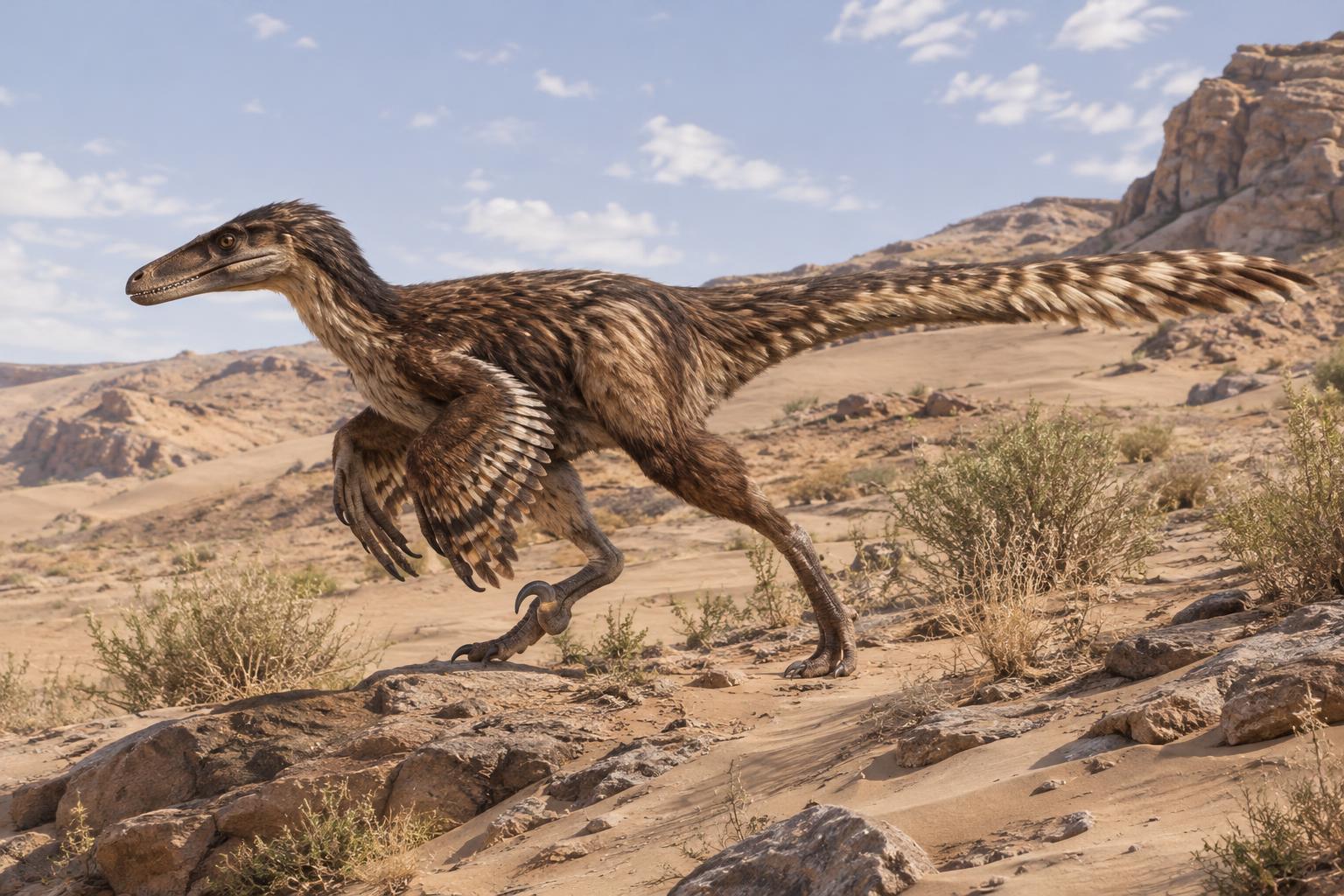
Velociraptor mongoliensis lived in the Late Cretaceous deposits of Central Asia (notably the Djadokhta Formation of modern Mongolia). Fossils indicate a slender, agile body roughly 2 metres long and weighing about 15–20 kg; skeletal and soft-tissue inferences support the presence of feathers. The skull was elongated with sharp, serrated teeth, and a strongly recurved claw on the second toe — features consistent with a predatory lifestyle involving grasping and subduing relatively small vertebrate prey.
- Diet
- carnivore (small vertebrates and scavenging)
- Size
- approx. 2 m length, 0.5 m hip height
- Weight
- approx. 15–20 kg (est.)
Behavior
Based on skeletal anatomy and comparisons with related dromaeosaurids, Velociraptor is interpreted as an active, cursorial predator that likely used rapid locomotion, grasping forelimbs, and a stiffened tail for maneuvering. Specific hunting techniques—such as whether the sickle claw was used to slash or to pin prey—remain debated; both solitary and cooperative hunting have been proposed, but direct evidence for coordinated pack hunting in this species is limited.
Observation history
On JuraLand the Velociraptor patrols the jagged ridges of Predator Ridge, slipping between wind-swept rocky spurs and low dunes in the early light. Park observers describe sudden, precise bursts of movement as individuals investigate rodent-like creatures or carrion; their plumage ruffles in desert breezes and they drop silently down stone faces. These vignettes are a fictionalized, atmospheric reconstruction meant to showcase likely habits and appearance rather than serve as new scientific data.
Facts
- Fossils primarily come from the Djadokhta and related formations in Mongolia.
- Possesses a distinctive curved claw on the second toe of each hind foot.
- Anatomical evidence supports the presence of feathers.
- Approximately 2 m long but relatively light and agile.
- Often misrepresented in media as much larger and lacking feathers.