Stegosaurus
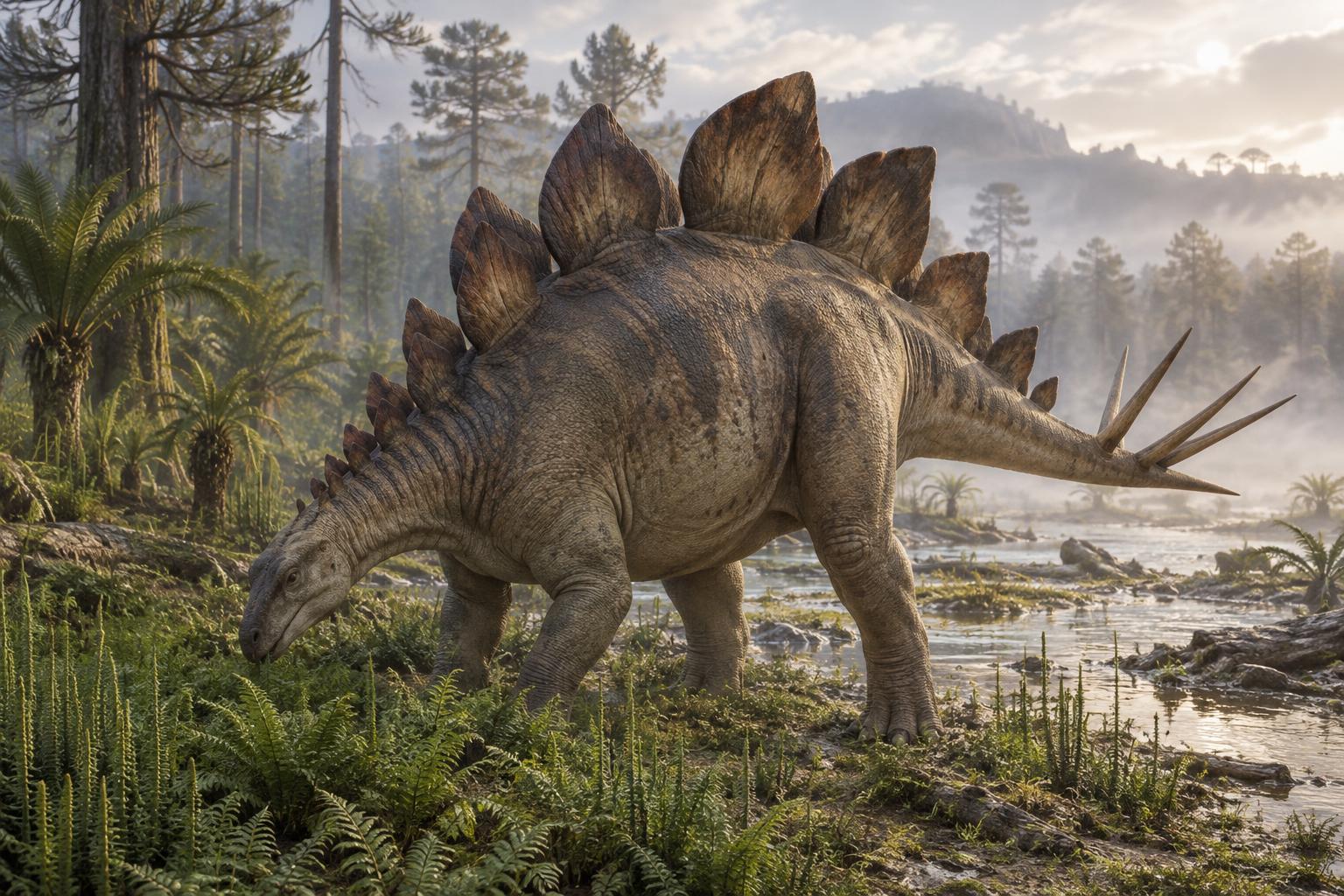
Stegosaurus is a genus of large herbivorous dinosaurs from the Late Jurassic (about 155–150 million years ago). Fossils are best known from North America; interpretations of its anatomy rely on skulls and several fairly complete skeletons, though some aspects of its appearance remain reconstructed from incomplete material. The dorsal plates and tail spikes are its most distinctive skeletal features. The body plan of Stegosaurus included a bulky torso supported by relatively short forelimbs and longer hindlimbs, a small skull, and a row of flat plates along the back. It is generally inferred to have been a browser of low vegetation, using its teeth and jaw apparatus to crop and process plants. Ecologically, Stegosaurus likely played a role in processing plant biomass and shaping vegetation structure in its environment.
- Diet
- herbivore
- Size
- up to ~9 m length (adult)
- Weight
- approximately 2–3 tonnes (estimated)
Behavior
Observation history
In one memorable observation, a young individual lingered by a stream while a larger animal raised its plates—an apparent display that changed the behavior of nearby predators. Later that evening several Stegosaurus gathered by a flooded meadow, presenting a scene of calm vigilance under a lowering sky.
Caretakers of the island tell stories of the Stegosaurus as a symbol of quiet strength — a reminder of deep-time landscapes and the stabilizing role large herbivores can play in maintaining plant communities.
Facts
- The dorsal plates are bony ossifications (dermal plates) arranged in rows along the back.
- The tail bore four large spikes likely used as a defensive weapon.
- The skull of Stegosaurus was relatively small compared to its body.
- Stegosaurus lived in the Late Jurassic, roughly 155–150 million years ago.
- Diet consisted mainly of low-growing plants; dental anatomy supports a herbivorous diet.