Pachycephalosaurus wyomingensis
Pachycephalosaurus wyomingensis
Late Cretaceous
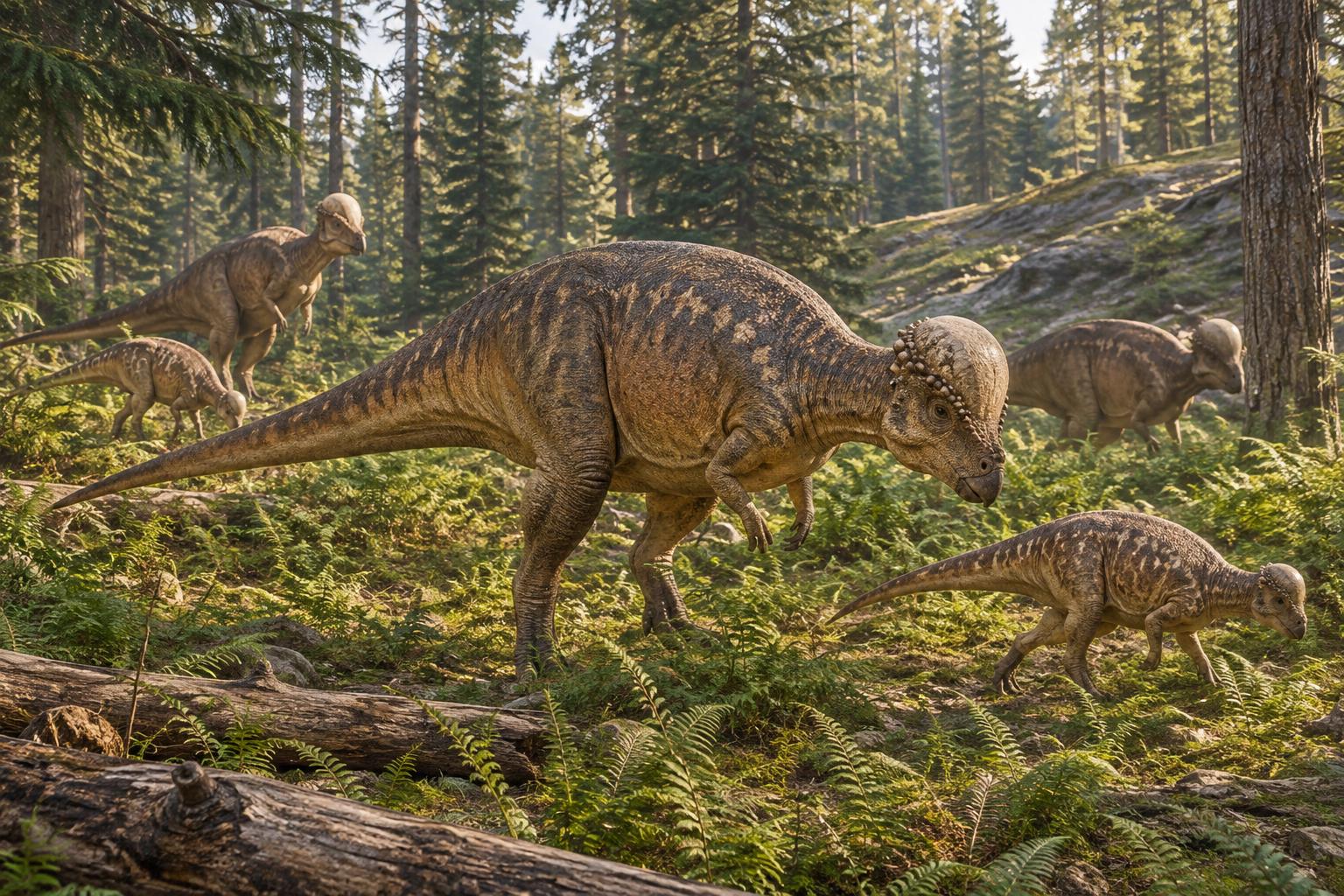
Pachycephalosaurus wyomingensis lived in the Late Cretaceous (Maastrichtian) of what is now North America; its remains are found in continental deposits that represent floodplains and forested landscapes. It is most recognizable for its highly thickened skull "dome," often bordered by low bosses and knobs that could be pronounced in adults. The body was compact, with relatively short forelimbs and stronger hind limbs adapted for terrestrial locomotion; the tail was not especially elongate. Dental and jaw features suggest a mainly herbivorous diet, suited to cropping and processing softer plant material, though occasional opportunistic intake of invertebrates cannot be fully excluded based on current evidence.
- Diet
- herbivore (may have been opportunistically omnivorous)
- Size
- up to about 4.5 m in length
- Weight
- around 300–600 kg (estimates vary)
Behavior
Fossil evidence documents ontogenetic and likely sexual variation in skull morphology: juveniles had thinner cranial bones, while adults developed the pronounced dome. Interpretations of dome function include display and intraspecific signaling, and possibly use in head-to-head or flank impacts during social contests; however, direct unambiguous evidence for forceful head-butting remains limited and subject to debate. Reconstructions of behavior on JuraLand follow these competing scientific interpretations while remaining cautious about certainty.
Observation history
Along the fern-dotted trails of JuraLand's Fern Forest, herds of dome-headed Pachycephalosaurus graze at dawn, moving between low stands of conifers and clearings where tender shoots are most abundant. Observers often note adult individuals pausing on low rises, their domes catching the light, while juveniles dart among fallen logs.
Occasionally a small congregation of adults assembles on a knoll in what appears to be a social display: postures, low vocalizations and gentle shoving give the impression of ritualized interaction rather than lethal combat. When true predators approach, these animals tend to scatter into denser vegetation rather than confront attackers, a behavior consistent with their build and presumed social nature.
Facts
- The skull dome is composed of dense bone and shows marked differences between juveniles and adults.
- Pachycephalosaurus is principally known from cranial remains; complete skeletons are rarer.
- Adapted to a primarily herbivorous diet, likely cropping low-growing vegetation.
- The hypothesis that adults used the dome in combat is debated; some fossils show lesions that could relate to impacts, but interpretations vary.
- Fossils are from Late Cretaceous continental deposits of western North America.