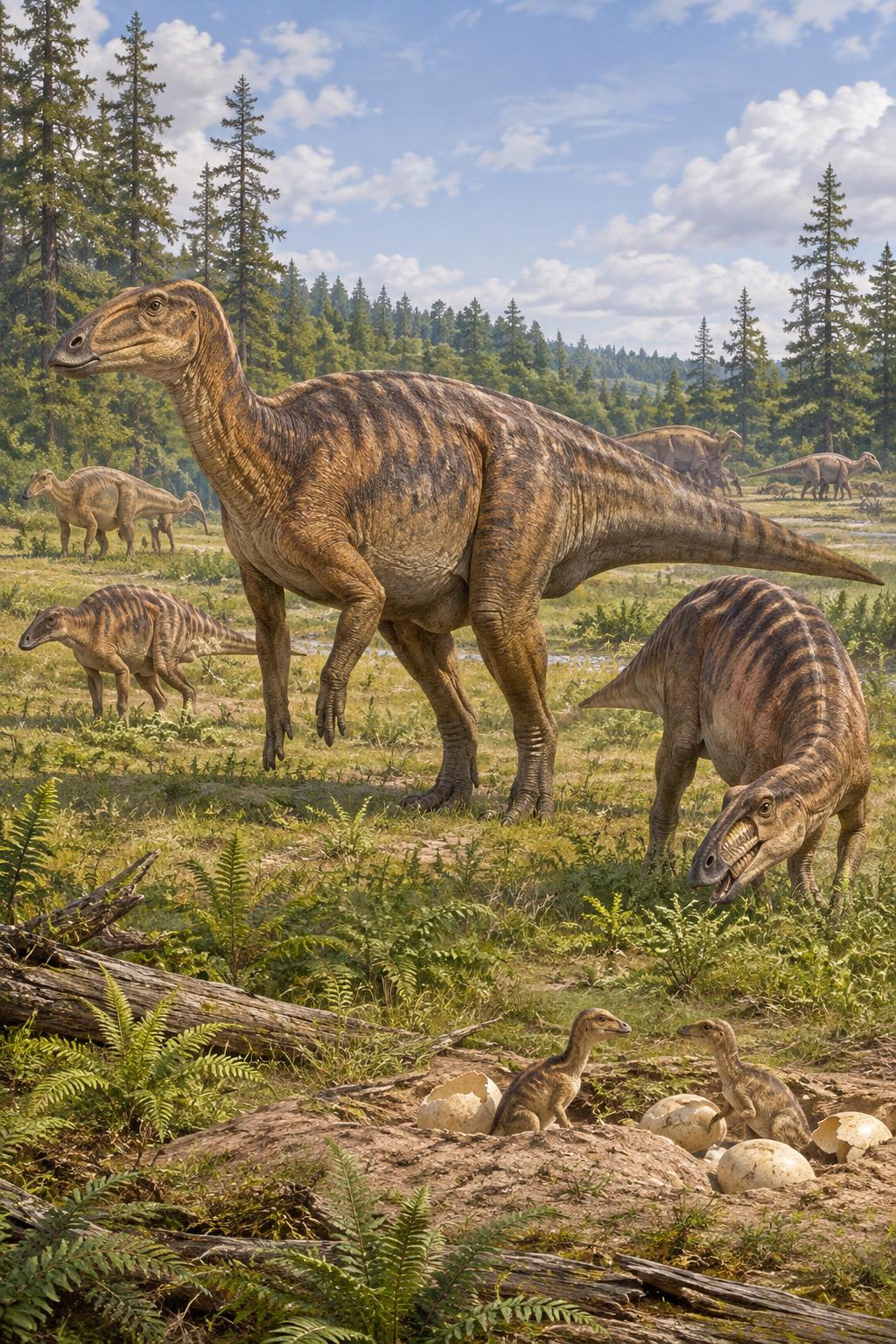
Maiasaura peeblesorum
Maiasaura peeblesorum
Late Cretaceous
Maiasaura peeblesorum is a member of the hadrosaurid (duck-billed) dinosaurs that lived during the Late Cretaceous in what is now western North America. The genus is notable for bonebeds and nesting sites found in Montana, which indicate colony nesting and aggregations of individuals. Anatomically, Maiasaura had a long body and tail, powerful hind limbs for locomotion, shorter forelimbs with flexible wrists, a broad beak for cropping vegetation, and complex dental batteries for grinding plant material. Its proportions and teeth are consistent with a large-bodied herbivore inhabiting open and mixed woodland environments.
- Diet
- herbivore
- Size
- 8–10 m length
- Weight
- 2–3 tonnes (approx.)
Behavior
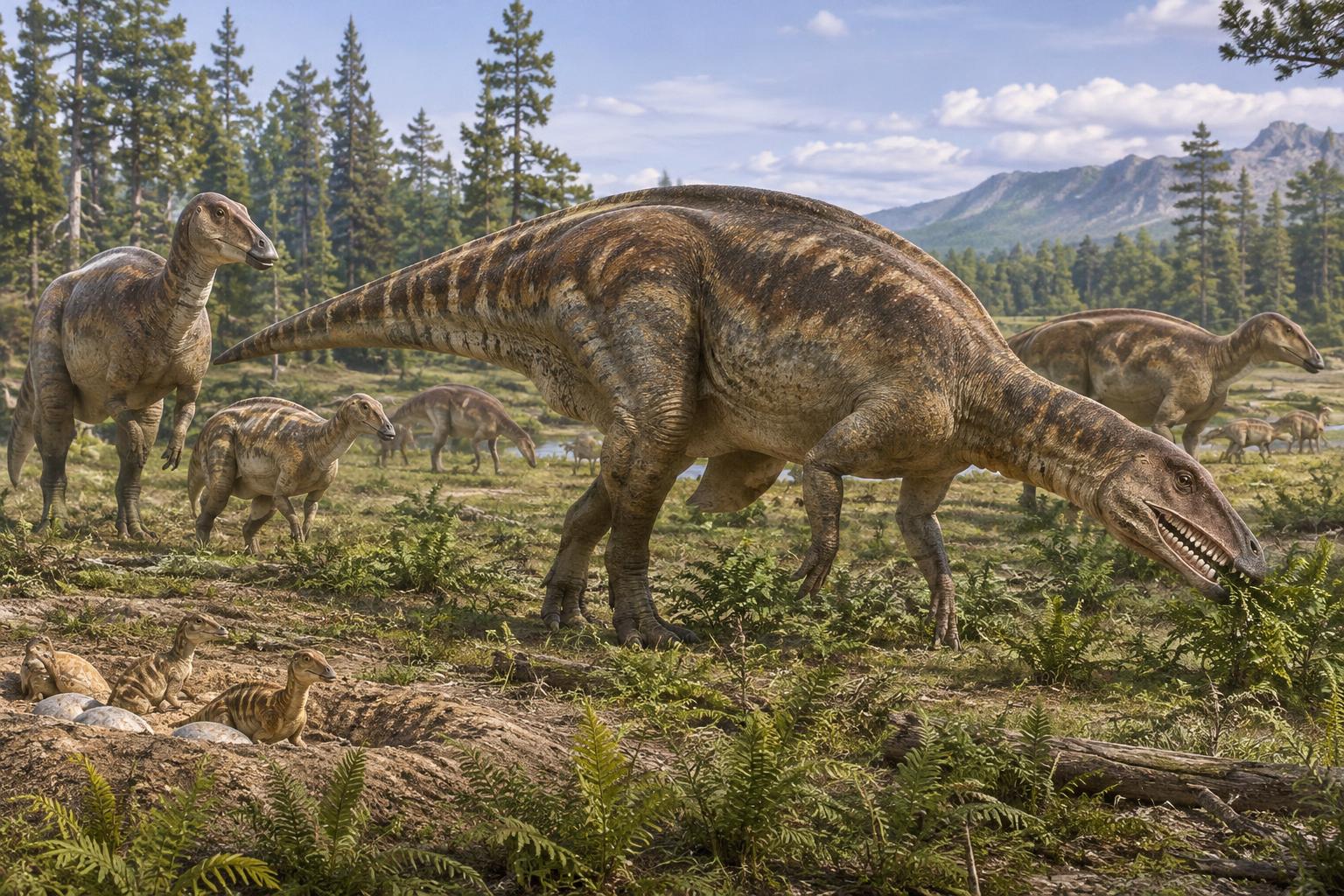
Fossil evidence shows Maiasaura nested in colonies and raised young in nests; discoveries of juveniles of different ages provide direct evidence for parental care and group protection. Reconstructions infer that these animals likely moved in herds searching for food, relied on numbers and size for defense against predators, and displayed social behaviors related to tending and protecting their offspring.
Observation history
On JuraLand a mist-filled valley opens into a wide plain where a herd of Maiasaura moves between sheltered groves and floodplain meadows. Adults form loose circles around the youngest when predators are suspected nearby, while older juveniles graze a little farther off.
During one evening observation, keepers noted a chorus of low, resonant calls as several adults clustered near a nest site; the young answered with higher-pitched chirps — an impression remembered by staff as a moment of visible family care.
At dusk the long silhouettes of Maiasaura traced slow lines across the landscape, their bulk reshaping pathways and trampling trails through tall fern fields as they migrated between feeding areas and nesting colonies.
Facts
- The genus name means 'good mother lizard', reflecting evidence for parental care.
- Type localities include nesting colonies with embryos and a range of juvenile ages.
- Possessed dental batteries specialized for processing tough plant material.
- Lived in colonies; bonebeds suggest dense aggregations and possible seasonal movements.
- Adults reached approximately 8–10 meters in length.
Photo gallery