Carnotaurus
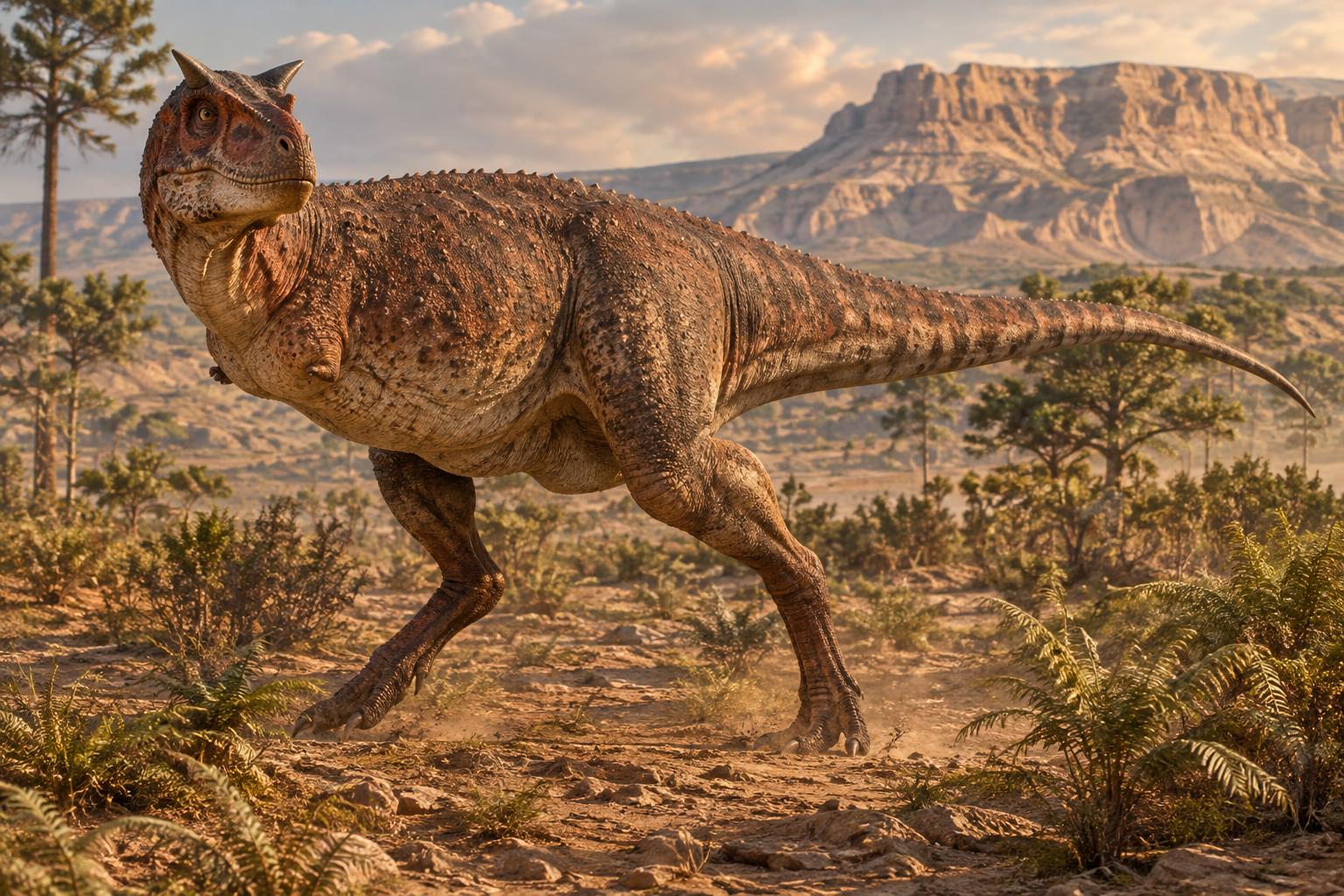
Carnotaurus is a genus of abelisaurid theropods known from a nearly complete skeleton from the Late Cretaceous of Argentina. Described by José Bonaparte in 1985, fossil material comes from Patagonian deposits dated to the Late Cretaceous. The skull was short and deep, bearing a pair of prominent bony horns above the eyes that distinguish it from many other theropods. Skeletal proportions indicate a muscular neck, robust torso and a long tail likely used for balance during rapid manoeuvres. The forelimbs were extremely reduced and unlikely to have been used for grasping prey; instead Carnotaurus relied on powerful hindlimbs and strong jaws with serrated teeth. Skin impressions associated with abelisaurids show a scaly integument with small bumps, which informs reconstructions of its external appearance.
- Diet
- carnivorous
- Size
- 8–9 m long
- Weight
- 1–1.5 tonnes
Behavior
Observation history
Visitors described a sudden burst of speed as the animal crossed a grazing patch of herbivores; it then halted on an outcrop, the horns casting long shadows at sunset. Researchers in JuraLand recorded skin impressions and cranial proportions consistent with museum specimens, confirming the match to Carnotaurus.
Over months the species became emblematic of Predators Ridge: elusive, powerful and adapted to open, semi-arid landscapes. Its trackways and occasional sightings provide lively material for public talks and field demonstrations.
Facts
- Named and described by José Bonaparte in 1985 from a well-preserved Argentine specimen.
- Distinctive paired horns above the eyes are formed by thickened cranial bones.
- Extremely reduced forelimbs — more so than in many other theropods.
- Skin impressions from related abelisaurids indicate a scaly, bump-textured skin.
- A Late Cretaceous predator from southern Gondwana (Patagonia).