Baryonyx walkeri
Baryonyx walkeri
Early Cretaceous
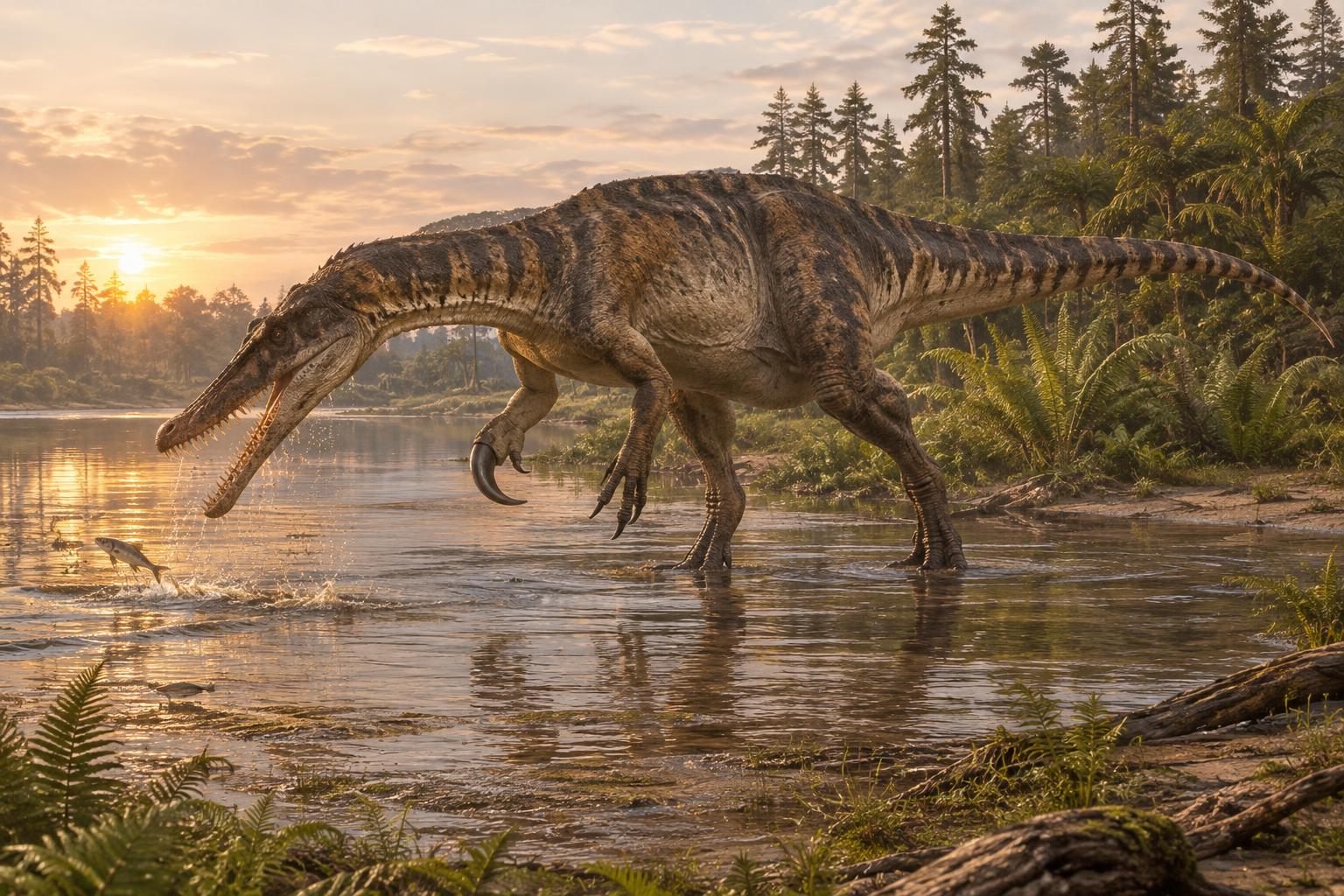
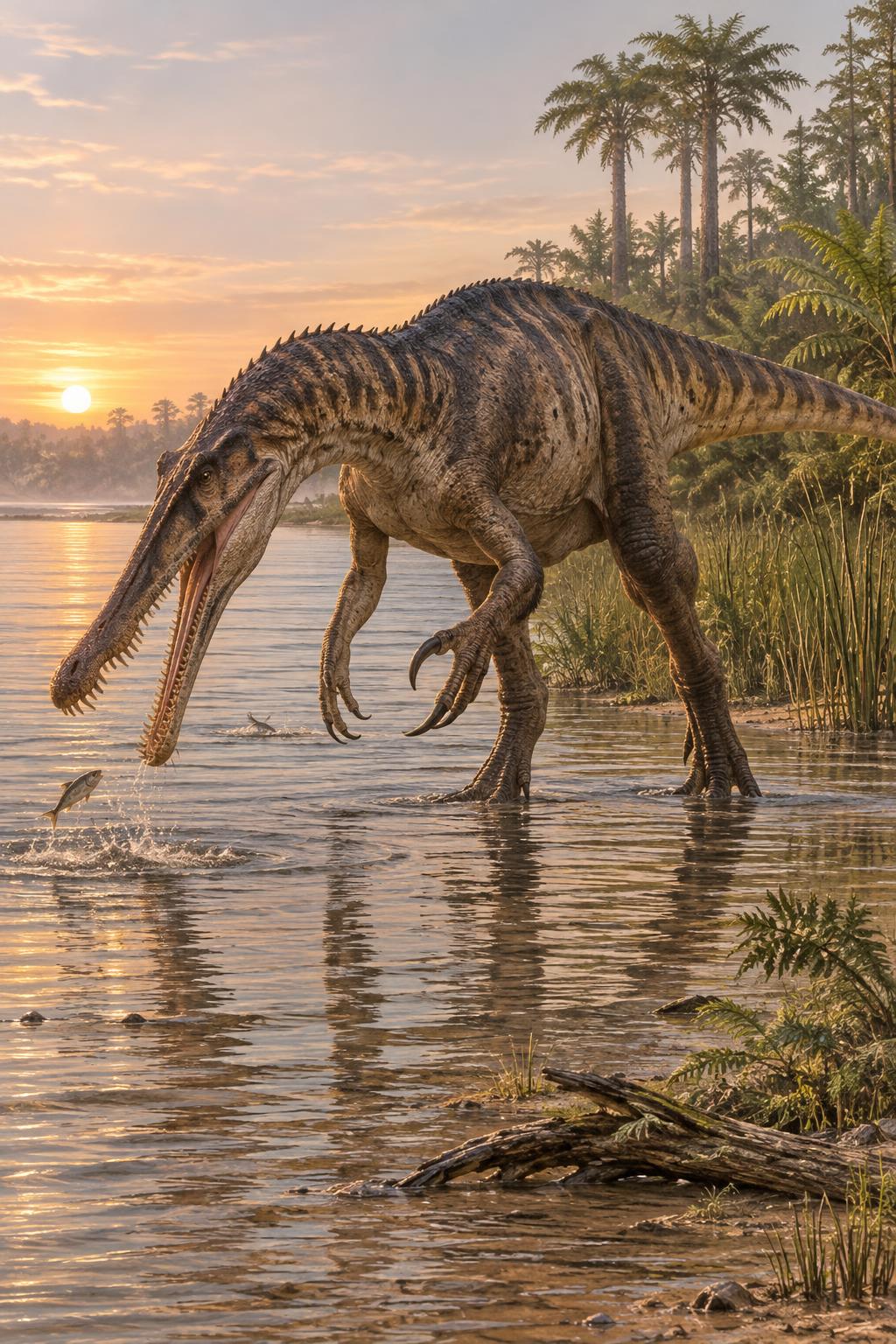
Baryonyx walkeri lived in the Early Cretaceous (around the Barremian) and is primarily known from European finds. Fossils indicate a coastal, riverine or lagoonal habitat; the skull and dentition show adaptations for catching fish, though its full diet likely included other animals as well. Described remains include a long, narrow snout filled with many slender teeth, powerful forelimbs and an unusually large recurved claw on the first finger that may have helped seize prey.
- Diet
- piscivore / opportunistic carnivore
- Size
- 7.5–10 m (estimated total length)
- Weight
- 1.2–1.7 tonnes (estimated)
Behavior
Behavioral interpretations combine direct fossil evidence (for example, fish scales associated with abdominal regions in some specimens) with reasonable reconstruction. Baryonyx is thought to have foraged in shallow water and along shores, using its long snout and strong forelimbs to snatch fish. It was probably an opportunistic carnivore—primarily piscivorous but also capable of taking other prey or scavenging when possible.
Observation history
On JuraLand, Baryonyx became a familiar figure along the shores of the Cretaceous Lagoon: a low-headed stalker with a distinctive long snout, scanning the shallows for movement. The island’s keepers noted that it favored dawn and dusk hunts, when schooling fish are most active—its silhouette, punctuated by a sweeping forelimb, is now a common sight at the waterline.
One recorded encounter showed a Baryonyx snapping forward with its massive thumb claw to dislodge a slippery fish from a shallow pool; the scene emphasized both the animal’s raw power and its refined ecological niche. On JuraLand it functions as both a predator and an emblem of productive coastal ecosystems.
Park narratives are explicitly framed as imaginative reconstructions for visitors; they do not replace the underlying paleontological evidence, which remains the basis for our anatomical and ecological understanding.
Facts
- The name Baryonyx means 'heavy claw', referring to the large thumb claw.
- One of the more complete specimens preserved fish scales and bones near the abdominal area, supporting a fish-based diet.
- The elongated narrow snout and numerous slender teeth resemble adaptations seen in modern piscivores.
- Finds are primarily from Early Cretaceous deposits in Europe; the species is known from a limited number of skeletons.
- Powerful forelimbs combined with piscivorous features suggest a flexible hunting strategy in coastal habitats.
Photo gallery