Archaeopteryx lithographica
Archaeopteryx (Archaeopteryx lithographica)
Late Jurassic
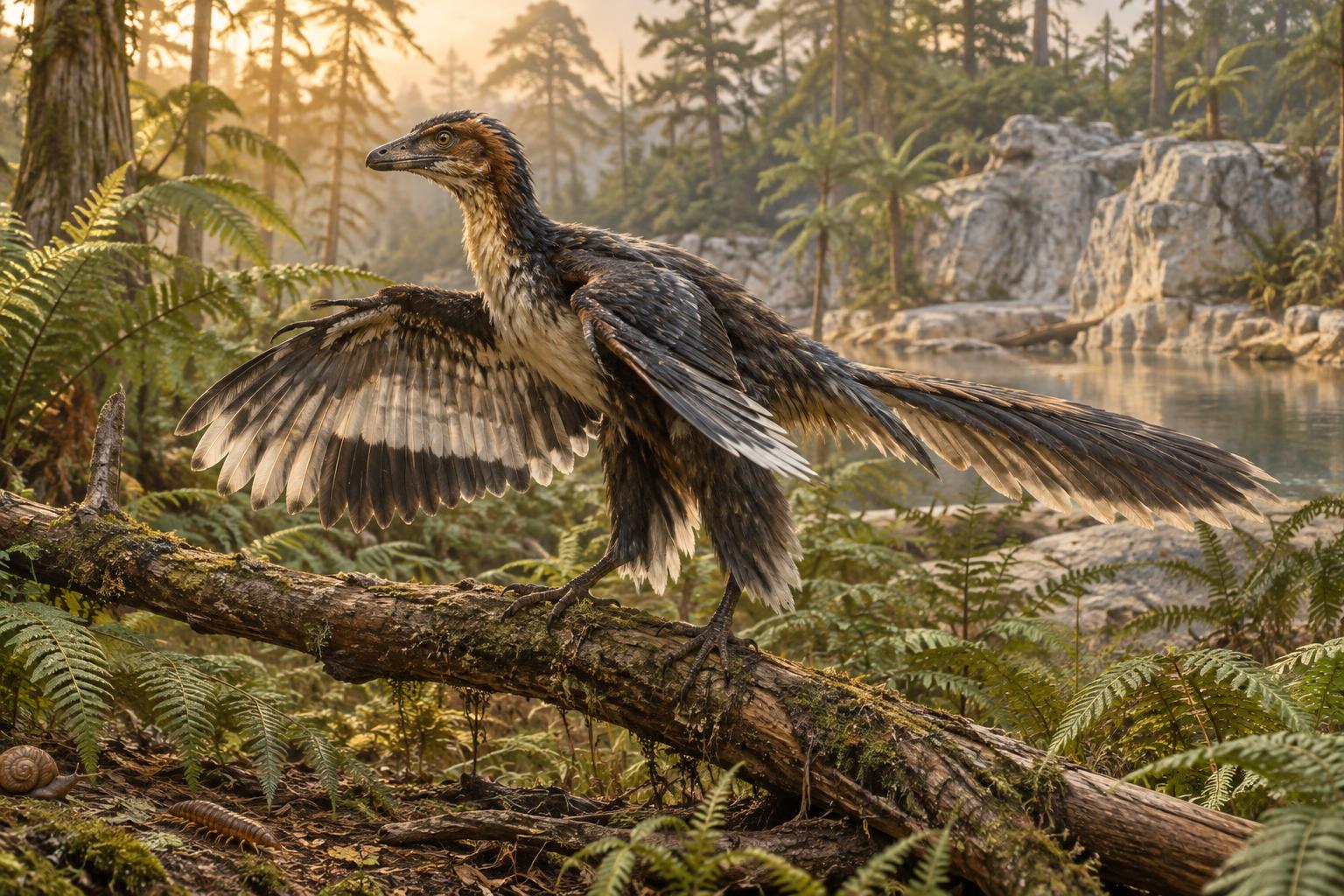
Archaeopteryx lithographica lived during the Late Jurassic (around 150 million years ago). Its fossils are mainly known from the Solnhofen-type limestones of Bavaria (southern Germany), deposits that reflect coastal-lagoonal environments with nearby wooded and marshy habitats. Its skeleton combines typical theropod features (teeth, long bony tail, three-fingered hands) with avian traits (feathers and wing-like forelimbs), which is why Archaeopteryx is often treated as an important transitional taxon between dinosaurs and birds.
- Diet
- small vertebrates and invertebrates (likely insectivorous/zoophagous)
- Size
- about 0.5 m total length (roughly the size of a modern crow)
- Weight
- approximately 0.5–1 kg (estimates vary)
Behavior
Bones and feather impressions show that Archaeopteryx was fully feathered, but details of its aerial abilities remain debated. Some studies support limited flapping or gliding capabilities, others favor mainly hopping and gliding among branches. Behavioral reconstructions rely on limb, wing and feather morphology: it likely hunted insects and small vertebrates, using agility to move through trees and shrubs.
Observation history
On JuraLand our observers first spotted Archaeopteryx at the fern-lined edge of the Forest sector at dawn: a small feathered shape launching from a low branch with a faint, birdlike call. In a dusk vignette, keepers recorded a trio moving through understory vegetation, nimbly flying short distances between damp branches. In another island scene a juvenile practiced wingbeats near a fallen log, repeatedly pushing off the ground — a charming glimpse of a young animal exploring its arboreal world on JuraLand.
Facts
- Known from several well-preserved fossils that include feather impressions.
- Combines features of non-avian theropods and early birds; historically pivotal in understanding avian origins.
- Some specimens show feathering on both forelimbs and hindlimbs.
- Flight capability is disputed: reconstructions range from gliding to limited powered flight.
- Fossils come from fine-grained lagoonal limestones, indicating a coastal and wooded habitat.