Allosaurus fragilis
Allosaurus fragilis
Late Jurassic
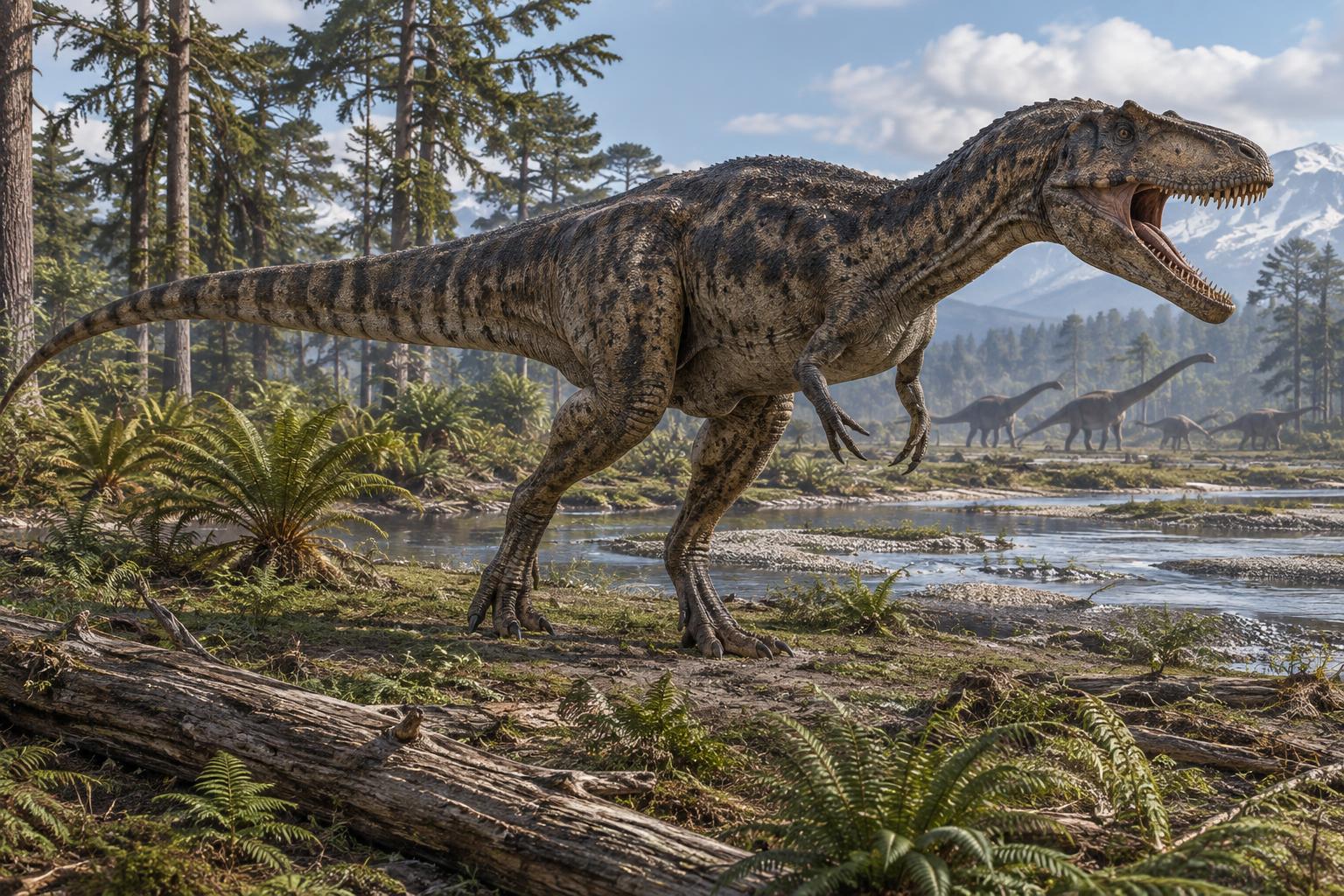
Allosaurus fragilis lived in the Late Jurassic (about 155–145 million years ago) in regions corresponding to present-day western North America and parts of Portugal. Fossils indicate a robust body with powerful hind limbs, relatively light forelimbs with three sharp claws, and a large skull bearing serrated teeth adapted for slicing flesh. The skull construction and jaw musculature point to a predatory lifestyle, though precise hunting techniques remain debated: Allosaurus likely combined gripping and slicing actions when subduing prey.
- Diet
- carnivore
- Size
- 8–12 meters length (adult), skull up to ~1 meter
- Weight
- 1.5–2.5 tonnes (approximate)
Behavior
Skeletal evidence and comparative anatomy show Allosaurus was an active predator; reconstructions of social behaviour (pack hunting, solitary ambushes, or facultative scavenging) derive from fossil context and trackway interpretation but are not definitively proven. Limb and tail morphology suggest it was reasonably agile and capable of forceful throat or head strikes.
Observation history
On JuraLand, dusky, dappled Allosaurus fragilis first drew keepers' attention when morning patrols at the Predators Ridge found a series of crossed tracks. That evening a group drove a herbivorous ankylosaurid into open ground, and staff observed a dynamic but controlled hunt: adults rotated roles to keep the quarry in view. In one memorable encounter a young Allosaurus approached a monitoring module with cautious curiosity yet ignored the equipment.
Facts
- Allosaurus is among the best-studied theropods of the Jurassic.
- Its skull was relatively light due to cavities and thin bone laminae.
- Adult length is typically estimated at 8–12 meters, mass around 1.5–2.5 tonnes (approximate).
- Some fossils show healed injuries consistent with clashes with large prey or intraspecific fights.
- Fossils are mostly found in sediments deposited on river plains and seasonal floodplains.
- Hunting methods are uncertain — possibilities include active predation on large prey and cooperative tactics.