Abelisaurus comahuensis
Abelisaurus (Abelisaurus comahuensis)
Late Cretaceous
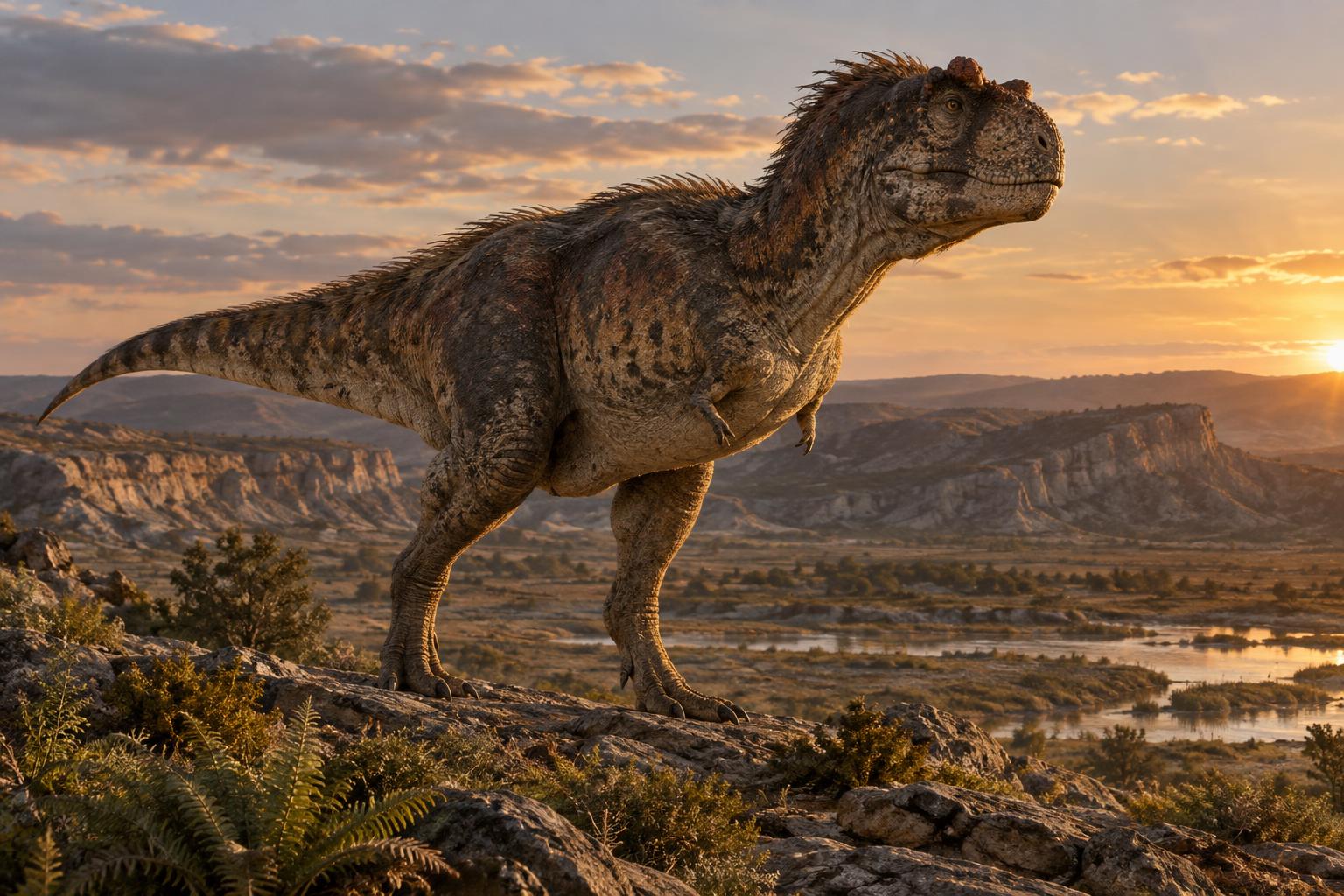
Abelisaurus is known from Late Cretaceous remains in Patagonia (Argentina) and is placed among the abelisaurids — a clade of southern theropods. Fossils are fragmentary, including parts of the skull and vertebrae; much of its overall anatomy is inferred from better-preserved close relatives. Abelisaurids typically had short, tall skulls, robust jaws and powerful hindlimbs, allowing them to function as effective terrestrial predators at medium to large body sizes.
- Diet
- carnivore
- Size
- 7–9 m length
- Weight
- ≈1–2 tonnes
Behavior
Direct evidence of behavior for Abelisaurus is limited; interpretations rely on skeletal features and comparisons with related taxa. It was likely an active predator, possibly employing ambush tactics or sudden bursts of speed to subdue prey. Social behavior (solitary versus group hunting) is uncertain: some abelisaurid specimens show signs of combat or display, but cooperative hunting for Abelisaurus specifically is not demonstrated.
Observation history
On JuraLand, Abelisaurus is a signature resident of the Predators Ridge: early morning silhouettes with tall skull profiles are a common sight along eroded bluffs. In one memorable encounter, a lone adult was observed investigating the carcass of a hadrosaurid, using short head-bobs and sideward displays to deter competitors. Another report tells of a brief, dramatic chase across fern-dotted clearings where an Abelisaurus forced a fleeing herbivore into marshy ground before abandoning the pursuit—an example of the unpredictable drama these predators bring to the island's ecosystems.
Facts
- The genus is named in honor of Argentine paleontologist Roberto Abel.
- The type species Abelisaurus comahuensis is known from fragmentary cranial remains and vertebrae.
- Abelisaurids were major terrestrial predators in southern continents during the Late Cretaceous.
- Forelimbs were highly reduced in abelisaurids and likely played little role in prey capture.
- Their skull morphology suggests strong jaw musculature and powerful bites.