16 November 2026
Sudden Squall over Chalk Lagoon
 Storm
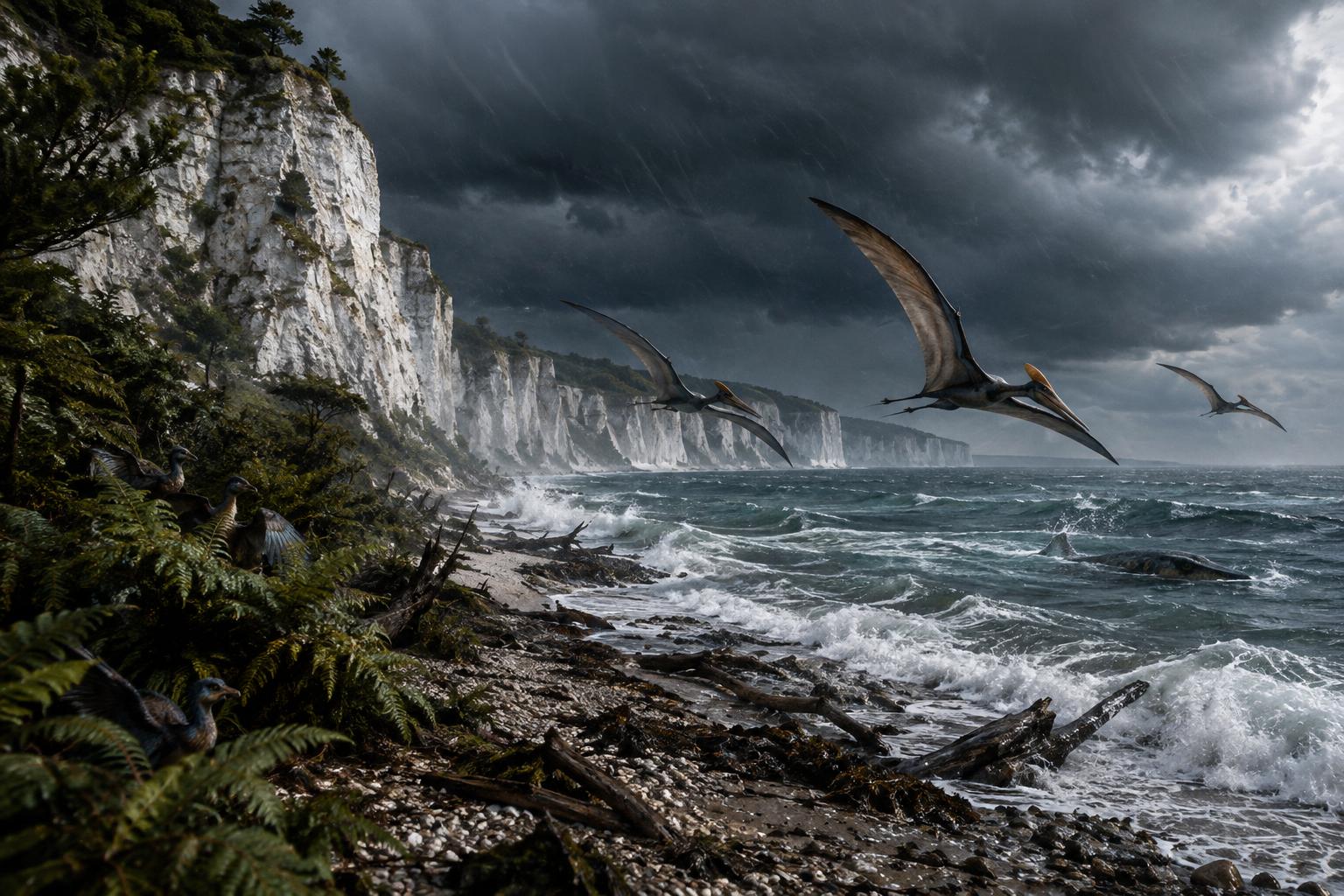
Early morning brought an unexpected burst of weather: a compact squall line moved across Chalk Lagoon, intensifying winds and whipping waves against the chalk cliffs in twenty to thirty minutes. The calm that had persisted all night gave way to sharp rainbands and gusty crosswinds.
Pteranodons, which usually shelter on the steep Ptero Cliffs, were noticeably more active along the lagoon's rim: several individuals took advantage of the gusts to skim low over the water, maneuvering to protect fledglings from the strongest currents. Archaeopteryx parties in the bordering ferns sheltered deeper into cover, where observers recorded agitated calls and nest rearrangements.
The most tense moment came when the juvenile mosasaur, spotted earlier near the western shore, was pushed into deeper water — the sudden chop and lateral winds made the shallows hazardous. The monitoring team has the area under watch: shoreline access is temporarily restricted and patrols are checking remaining shelters at the sea-facing buttresses.
The squall passed by midday, leaving scattered branches, fresh tracks on the shingle and noticeably altered currents. Teams are now assessing shelter integrity and continuing to monitor the pterosaur groups and the young mosasaur to ensure they resume normal feeding routes.