25 August 2026
Storm at Ptero Cliffs
 Storm
Storm
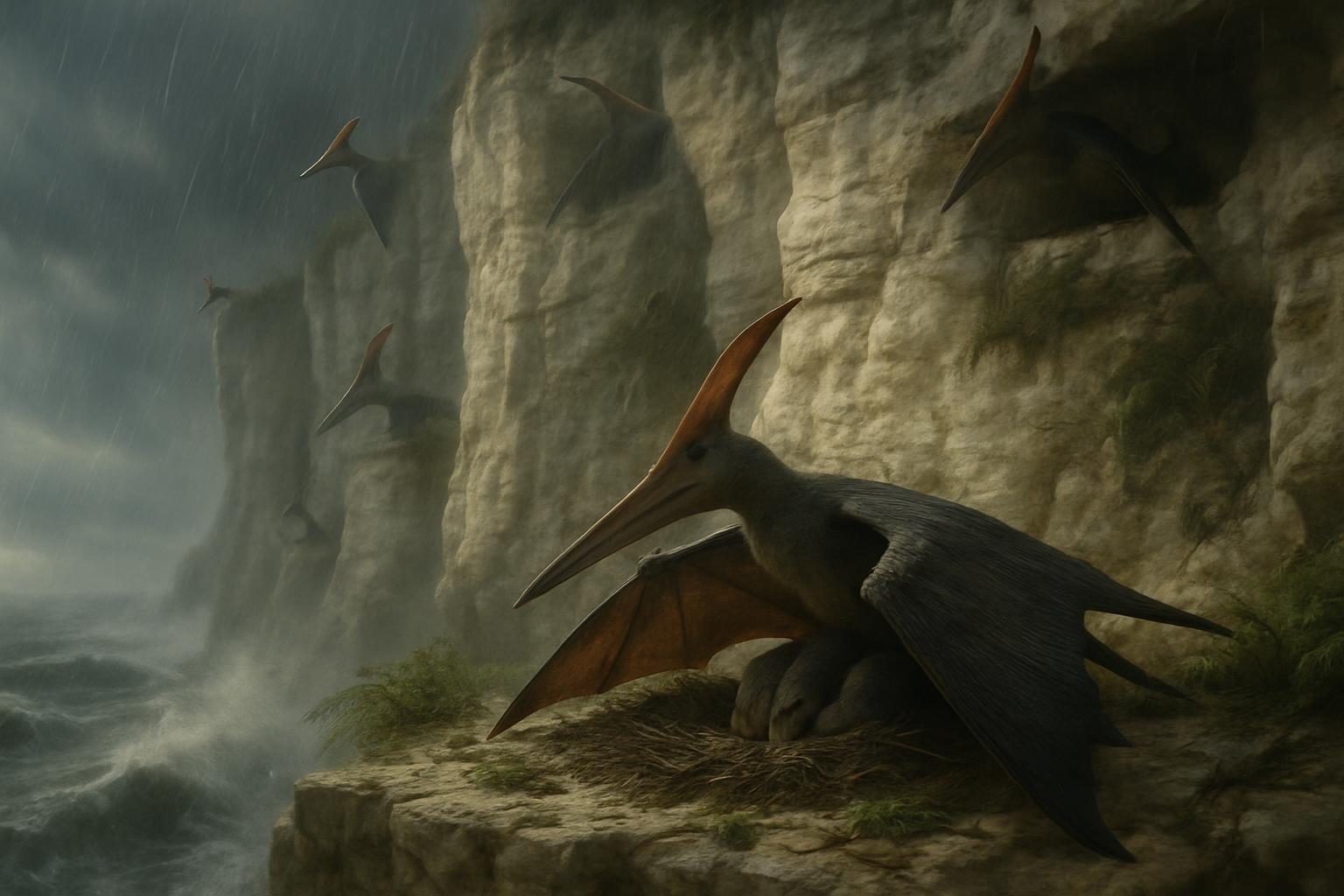
Early this morning a short but fierce coastal squall swept across the Ptero Cliffs. Sea winds intensified within minutes, lifting salt mist and driving low clouds while adult Pteranodons, wings taut, scrambled along the ledges searching for sheltered recesses.
Nesting activity that had been heightened earlier was abruptly curtailed: some adults dragged small twigs and plant-fibers into rock crevices, others curled around clutches to shield them from gusts. On the steep faces there were rapid takeoffs and landings—an urgent choreography aimed at keeping eggs and hatchlings steady.
Despite the surge of waves and driving rain, damage remained localized: a few fragile vegetation patches were stripped from ledges and an outer nesting terrace lost some cover. Observation teams have increased monitoring and applied minor reinforcements in the most exposed niches—light shelters and directed mesh to reduce direct water flow.
The squall subsided by mid-morning; Pteranodons slowly resumed normal activity but parents remain vigilant. Monitoring will continue through the day, with priority given to clutch stability and the condition of recently active nests.
Nesting activity that had been heightened earlier was abruptly curtailed: some adults dragged small twigs and plant-fibers into rock crevices, others curled around clutches to shield them from gusts. On the steep faces there were rapid takeoffs and landings—an urgent choreography aimed at keeping eggs and hatchlings steady.
Despite the surge of waves and driving rain, damage remained localized: a few fragile vegetation patches were stripped from ledges and an outer nesting terrace lost some cover. Observation teams have increased monitoring and applied minor reinforcements in the most exposed niches—light shelters and directed mesh to reduce direct water flow.
The squall subsided by mid-morning; Pteranodons slowly resumed normal activity but parents remain vigilant. Monitoring will continue through the day, with priority given to clutch stability and the condition of recently active nests.