07 August 2026
Night Roar on Predator Ridge
 Alert
Alert
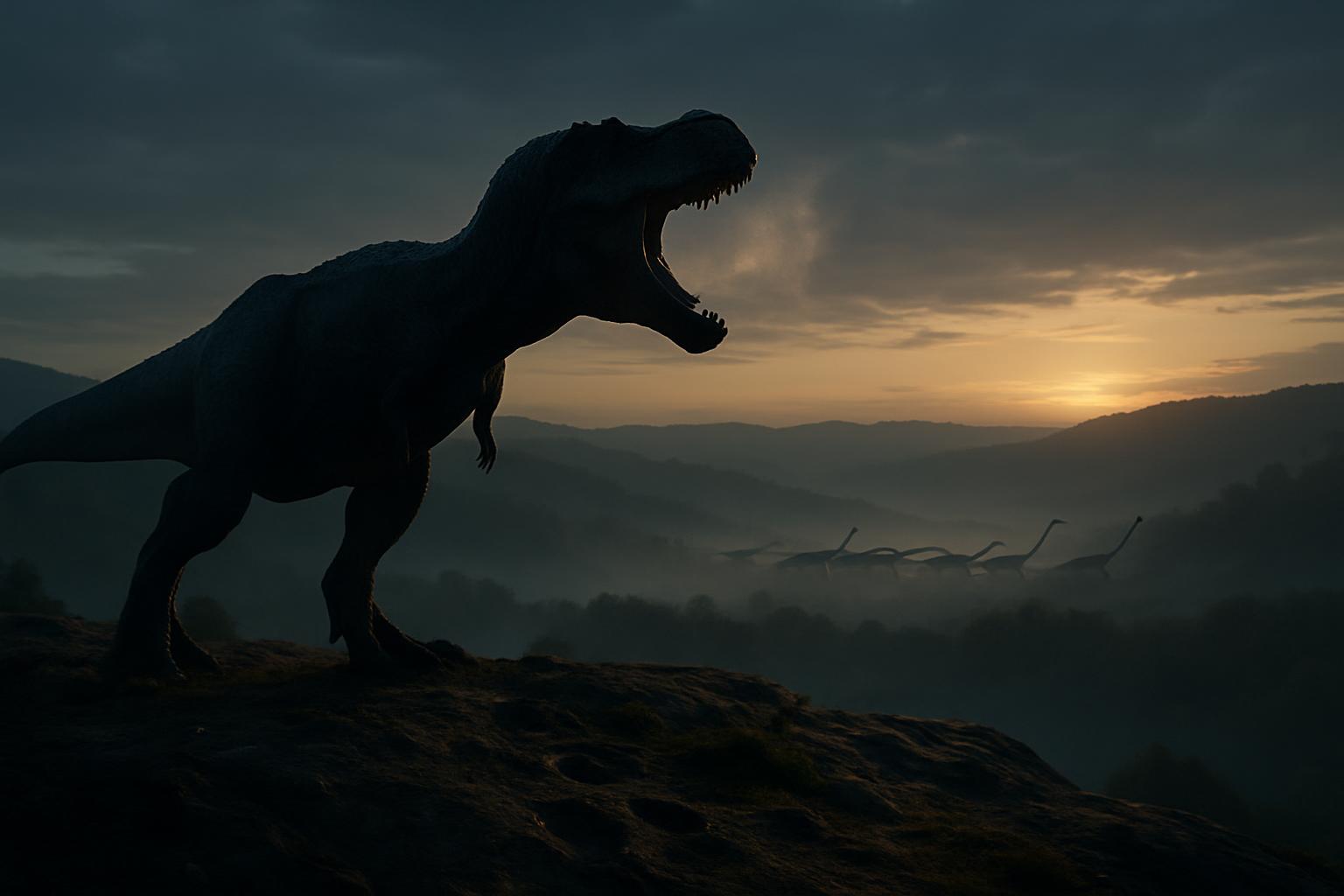
An evening patrol on Predator Ridge shifted into heightened alert when acoustic sensors and night cameras captured a sustained low-frequency roar from the ridge line. Audio recordings and thermal footage indicate an adult Tyrannosaurus rex took position on a rocky promontory, emitting long vocalizations and leaving fresh tracks in the soft ground.
At the same time, distant silhouettes of long-necked diplodocus were visible moving in a column toward the Valley of Giants (ongoing migration in Sector B-12). Observers note the roar may have been a territorial signal or a long-range assessment: the predator occupied a commanding viewpoint and appeared to monitor the moving herbivores without launching an immediate pursuit.
Night-control protocols were enacted: access across the ridge's northern approach was restricted, observation drones rerouted, and nearby watchpoints increased surveillance. Several roar episodes were recorded over minutes-long intervals; no direct interaction occurred — visual and thermal tracking showed the species maintained distance and no chase ensued.
The event is a reminder of an apex predator's influence on landscape movements: a single vocal display at a zone boundary can alter the behaviour of migrating herds and trigger heightened vigilance among staff. Predator Ridge remains under control while rangers continue to monitor nocturnal activity rhythms.
At the same time, distant silhouettes of long-necked diplodocus were visible moving in a column toward the Valley of Giants (ongoing migration in Sector B-12). Observers note the roar may have been a territorial signal or a long-range assessment: the predator occupied a commanding viewpoint and appeared to monitor the moving herbivores without launching an immediate pursuit.
Night-control protocols were enacted: access across the ridge's northern approach was restricted, observation drones rerouted, and nearby watchpoints increased surveillance. Several roar episodes were recorded over minutes-long intervals; no direct interaction occurred — visual and thermal tracking showed the species maintained distance and no chase ensued.
The event is a reminder of an apex predator's influence on landscape movements: a single vocal display at a zone boundary can alter the behaviour of migrating herds and trigger heightened vigilance among staff. Predator Ridge remains under control while rangers continue to monitor nocturnal activity rhythms.