06 September 2026
Juvenile Mosasaur and Lagoon Ecology
 Scientific fact
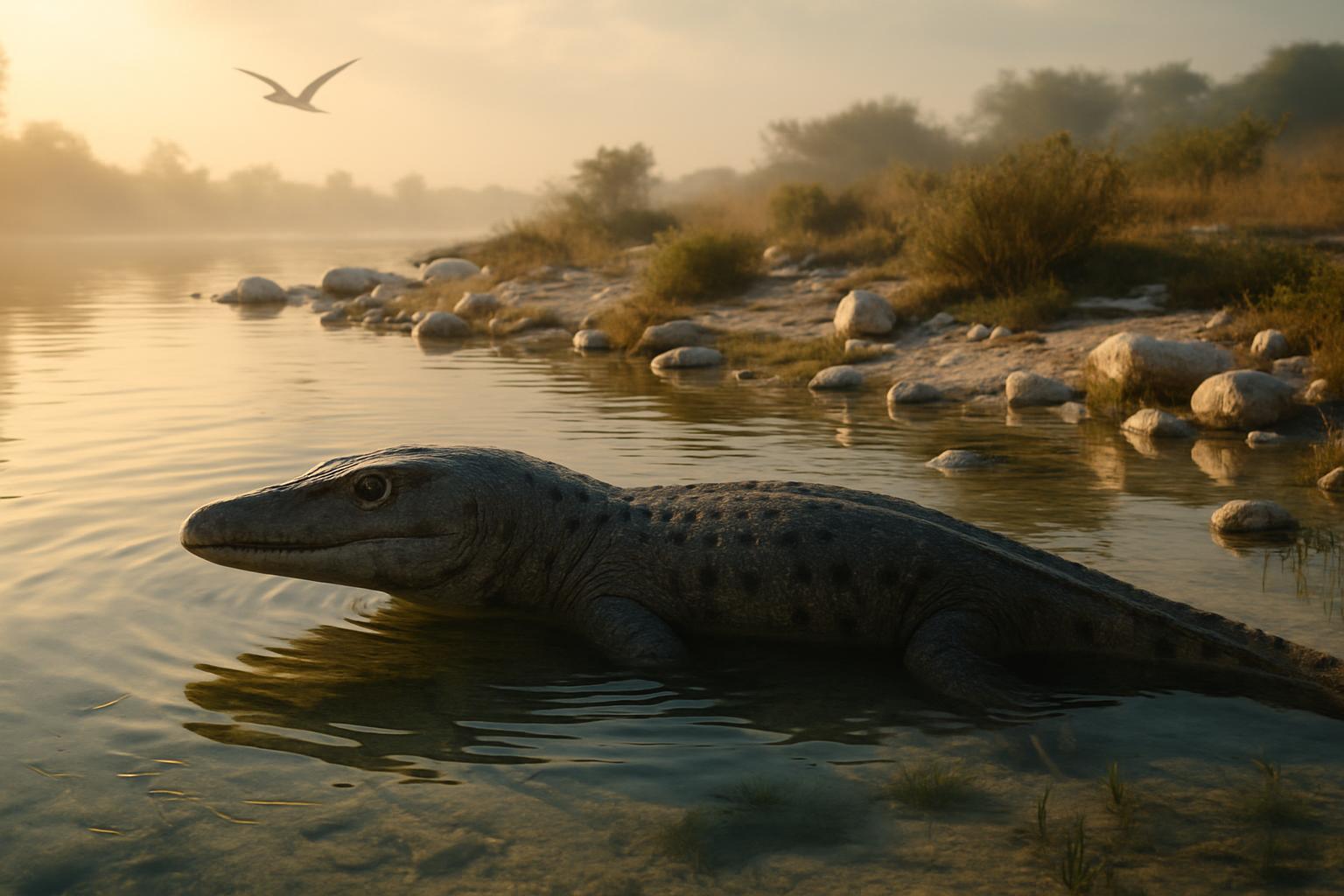
A juvenile mosasaur was spotted today in Chalk Lagoon — a reminder of key ecological patterns in coastal Mesozoic waters. Young marine reptiles tend to remain in shallower areas where their prey — small fish and cephalopods — is abundant, and where lagoon margins and shoals provide natural refuge from larger predators.
This depth-based segregation helps regulate populations: juveniles feed on different trophic levels than adults, reducing direct food competition. Interactions between juvenile mosasaurs and flying pterosaurs, which take fish near the surface and along shallows, illustrate niche partitioning — some predators exploit surface and nearshore resources while others hunt within the water column.
Beyond food, coastal vegetation and shallow reef structures offer shelter: complex substrates slow the approach of large hunters, granting juveniles time to escape and grow. Observing this young mosasaur reinforces an important fact for island management: protecting shallow coastal zones is essential to sustaining marine community diversity.
This depth-based segregation helps regulate populations: juveniles feed on different trophic levels than adults, reducing direct food competition. Interactions between juvenile mosasaurs and flying pterosaurs, which take fish near the surface and along shallows, illustrate niche partitioning — some predators exploit surface and nearshore resources while others hunt within the water column.
Beyond food, coastal vegetation and shallow reef structures offer shelter: complex substrates slow the approach of large hunters, granting juveniles time to escape and grow. Observing this young mosasaur reinforces an important fact for island management: protecting shallow coastal zones is essential to sustaining marine community diversity.