16 September 2026
Juvenile mosasaur and its role in the lagoon
 Scientific fact
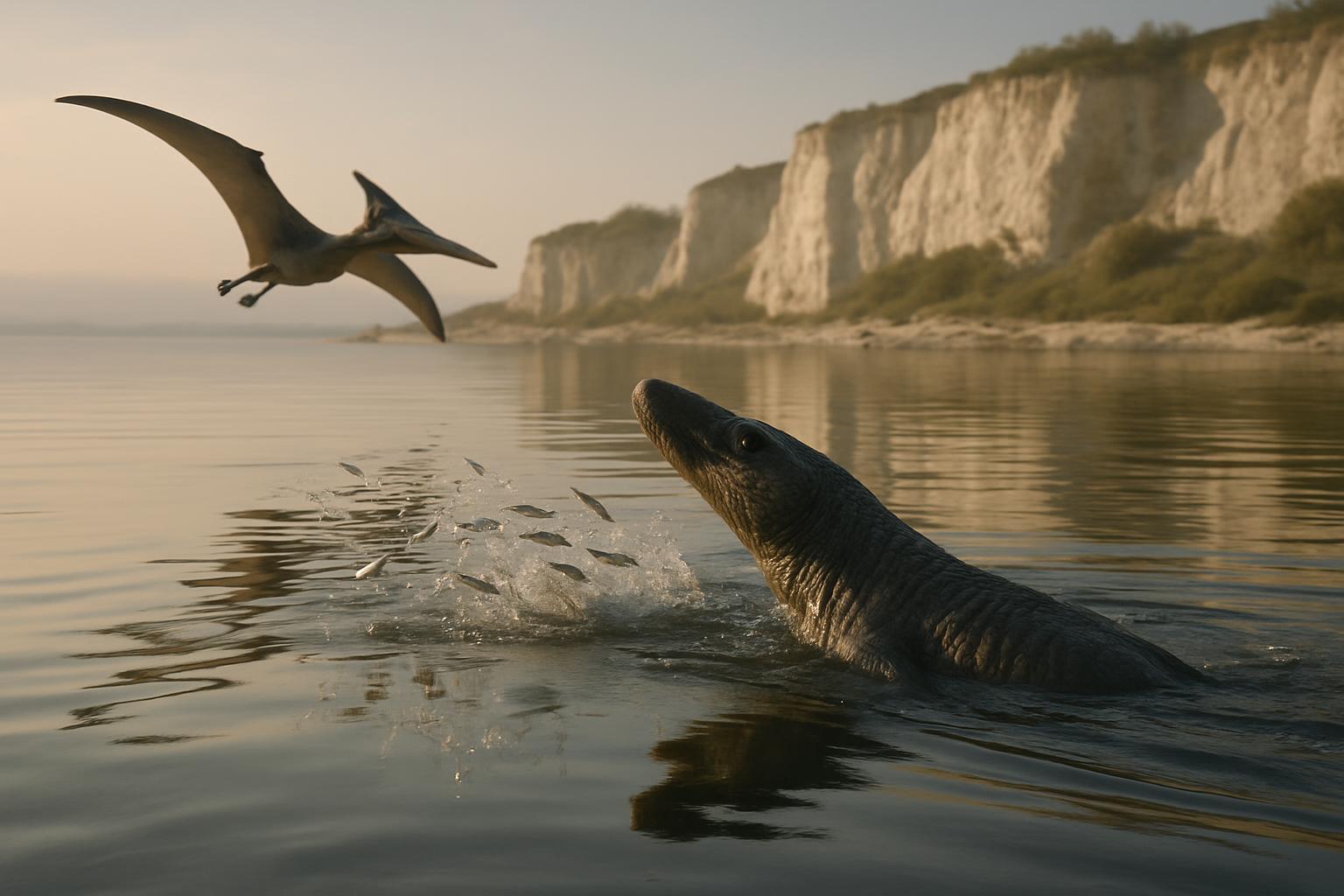
Recent observations in Chalk Lagoon have recorded a juvenile mosasaur whose feeding style is clearly distinct from that of larger individuals: it hunts nearer the surface with quick lunges at schooling fish and juvenile coastal species. This juvenile foraging reduces direct competition with larger predators by occupying a different spatial and trophic niche.
The presence of surface-feeding juveniles affects the local food web: removing small, surface-dwelling fish eases pressure on benthic populations and allows invertebrate communities and aquatic vegetation to recover. Under the current calm conditions, the shifts in surface shoals and resulting changes in organic matter distribution are especially noticeable.
Pteranodon also factors into this dynamic as a piscivore that benefits when juveniles drive fish toward the surface. Although there is no direct interaction, this indirect facilitation shows how different trophic groups can influence one another’s access to prey without direct conflict.
For the keeper team, this fact emphasizes the importance of preserving quiet lagoon zones and minimizing disturbances. Monitoring juvenile mosasaurs demonstrates how ontogenetic changes within a single species contribute to the resilience of the coastal ecosystem.
The presence of surface-feeding juveniles affects the local food web: removing small, surface-dwelling fish eases pressure on benthic populations and allows invertebrate communities and aquatic vegetation to recover. Under the current calm conditions, the shifts in surface shoals and resulting changes in organic matter distribution are especially noticeable.
Pteranodon also factors into this dynamic as a piscivore that benefits when juveniles drive fish toward the surface. Although there is no direct interaction, this indirect facilitation shows how different trophic groups can influence one another’s access to prey without direct conflict.
For the keeper team, this fact emphasizes the importance of preserving quiet lagoon zones and minimizing disturbances. Monitoring juvenile mosasaurs demonstrates how ontogenetic changes within a single species contribute to the resilience of the coastal ecosystem.