05 October 2026
Diplodocus as Landscape Engineers
 Scientific fact
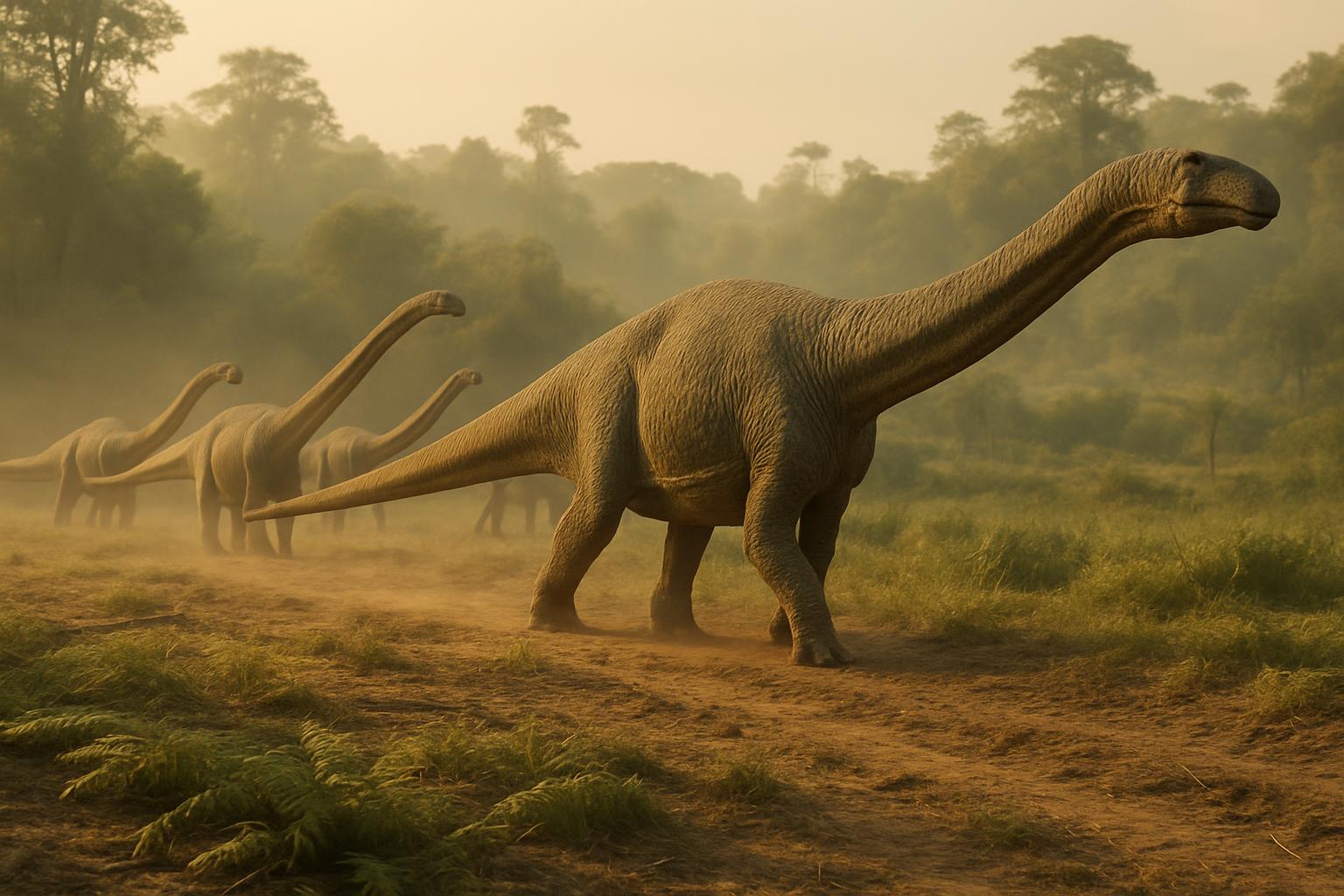
The ongoing migration of Diplodocus in sector B-12 highlights these giants' role as landscape engineers. Their dense columns crush young shoots and bend taller stems, opening light gaps down to lower ferns and grasses. The result is a patchwork of narrow clearings and mixed-height vegetation that serves as microhabitats for smaller species and as regeneration hotspots.
This process alters food-web dynamics: cleared tracks make movement easier for predators such as Tyrannosaurus, while simultaneously creating shelter and foraging niches for smaller herbivores. Periodic breaches in canopy continuity boost plant community diversity, gradually redistributing resources across the valley.
Physical traces of the migrations — compacted soil and beaten paths — persist for weeks to months, especially during the dry season. These routes facilitate subsequent movements by the herd and by other species, contributing to the establishment of stable migration corridors on the island.
Documenting these effects allows the park team to understand how large-bodied dinosaurs shape ecosystem structure and which areas need targeted monitoring to maintain biodiversity balance.
This process alters food-web dynamics: cleared tracks make movement easier for predators such as Tyrannosaurus, while simultaneously creating shelter and foraging niches for smaller herbivores. Periodic breaches in canopy continuity boost plant community diversity, gradually redistributing resources across the valley.
Physical traces of the migrations — compacted soil and beaten paths — persist for weeks to months, especially during the dry season. These routes facilitate subsequent movements by the herd and by other species, contributing to the establishment of stable migration corridors on the island.
Documenting these effects allows the park team to understand how large-bodied dinosaurs shape ecosystem structure and which areas need targeted monitoring to maintain biodiversity balance.